Glenn: They say that everyone has a green thumb in Miami. Stick just about anything in the ground and in a week or two you have a giant leafy green thing growing in the backyard.
Raúl: Miami has a wide variety of tropical and semi-tropical plants. For most visitors from northern climes, Miami plant life is a new experience.
Jorge: Drive around any Miami neighborhood and you're going to see a lot of things you never saw in Dubuque!
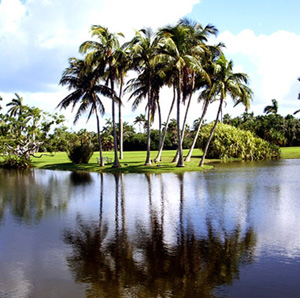
Glenn: The plant life here is quite remarkable and definitely beautiful. The county and state have really helped with massive plantings -- especially palm trees -- along the turnpike and expressways.
Jorge: Many of these trees replaced trees damaged by Hurricane Andrew.
Raúl: Drive through a tree-lined street in Coral Gables and you will enjoy a wonderful tropical plant experience.
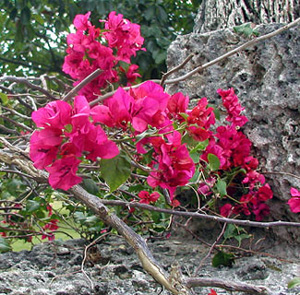
Jorge: If you really want to get to know and love Miami flora, there are a few places where you can get out the car and immerse yourself in a tropical garden.
Glenn: If you don't know a Mangifera indica (mango) from a Hevea brasiliensis (rubber tree), why not visit a place where they have people who can set you straight? In no time, you too can be a tropical plant expert.

Glenn: Here in one location you can experience just about the entire spectrum of plants and trees that are typical of the ones you'd find in the average Miami backyard.
Raúl: You'll also see many exotic and rare specimens here!
Jorge: The Fairchild Gardens first opened to the public in 1938. Robert H. Montgomery created the Gardens and named them in honor of his friend David Fairchild, a world-renowned botanist.
Glenn: Every backyard fruit grower in Miami owes a debt of gratitude to Fairchild. He is credited with bringing the mango to cultivation in the United States.
Raúl: The Fairchild Gardens cover 83 acres of land and is located just off the Old Cutler Road in Coral Gables.
Jorge: One of the highlights of the collection is the 100 rare native plant species from South Florida and the Caribbean.
Glenn: Many people enjoy visiting the gardens on weekends. However, if you are in town during the week on vacation, why not come on a weekday when the gardens are much less crowded?
Jorge: The only exception to this is the many festivals that the Fairchild Gardens holds each year. These weekend events do draw crowds, but they add another interesting element to your visit.


Raúl: Two of the most popular events of the season are the International Orchid Festival and the International Mango Festival.
Jorge: The Orchid festival features thousands of orchid plants that you can buy and take home.
Raúl: And the Mango Festival? Yes, there are plenty of mangos for sale here!

Glenn: You might wonder why, in a city that is just overflowing with mangos in the summer, would any local person go to a place to see MORE mangos?
Raúl: The Mango Festival features many different varieties of mangos, many unusual and some exotic.
Jorge: So many people come just to try the different varieties. A mango auction is very popular.
Glenn: You also can sample mango cuisine at a mango brunch.
Jorge: All of the events at Fairchild usually include food booths on the grounds, so you can enjoy a lunch or snack as you stroll around.


Raúl: Many people told us about this park where the fruits, and even the spices literally grow on trees!
Jorge: Finally, we just had to check it out for ourselves and we weren't disappointed.
Glenn: Miami-Dade County Parks and Recreation owns and manages the Fruit and Spice Park.

Glenn: Preston B. Bird and Mary Calkins Heinlein created the Park in 1944. Bird was a County Commissioner whose campaign platform included the goal of creating and tropical park, and that's exactly what he did after his election.
Jorge: What, a politician actually keeping a campaign promise?
Jorge: They have more than 500 species of plants including 65 varieties of bananas and 80 varieties of mango!
Glenn: Visitors can roam the grounds on their own and with a map and the identifying signs, you can see a lot on your own.

Raúl: And some of the fruit is poisonous.
Glenn: Although this isn't DisneyWorld, they do have a motorized tram that takes visitors on a guided tour.
Jorge: The nice thing about the tour? Your guide will usually take you to a plant or tree and let you pick one fruit for your own personal consumption.
Glenn: The other nice thing about the tour? You want eat anything poisonous by mistake!
Jorge: The Park has the ubiquitous gift shop, however it's here you'll get a chance to sample several types of tropical fruits, so don't just rush the kids through here.
Glenn: Besides, the gift shop does have many nice things for sale including fruit, juices, jams, jellies, teas, and "a wonderful selection of cookbooks."
Raúl: Yes, you can even buy a copy of Three Guys From Miami Cook Cuban here!
Jorge: Oh, we almost forgot to mention Park Manager Chris Rollins. He's the guy who has really made the park what it is today.
Jorge: If you're doing our Krome Avenue Fruit and Vegetable Tour, the Fruit and Spice Park is highly recommended.
Raúl: Enjoy the fruit!


ADMISSION: Adults $15.00 | $12 Senior citizens 65 and older | Children 12 and under free
NOTE: The first Wednesday of each month is Contribution Day, when visitors set their own admission fee.
HOURS: Open seven days a week, 9:30 AM to 4:30 PM | Closed Christmas
TRAM TOURS: Hourly
LENGTH OF VISIT: Allow 2 to 4 hours

ADMISSION: Adults $5.00 | Children (6 -12 years of age) $1.50 | Children under 6 Free
HOURS: Open seven days a week, 10:00 AM to 5:00 PM | Closed Christmas
TRAM TOURS: Daily at 11:00 AM, 1:30 PM and 3:00 PM
LENGTH OF VISIT: Allow 1 to 3 hours
Visit All of Our Sites